

55+ & Active Adult Real Estate
Treasure Coast 55+ & Active Adult Communities
Find the right fit for the way you want to live. From resort-style amenities and golf to low-maintenance homes and new construction, Florida’s Treasure Coast offers more than one path to your next chapter. Compare communities, understand the true costs of ownership, and make your next smart move with confidence.
20 Years in Real Estate
South Florida & Treasure Coast · Community & Relocation Guidance
Choosing a Community
Finding the Right 55+ Community Is About More Than the House
Two communities can have similar homes and very different day-to-day experiences. One may revolve around a busy clubhouse calendar. Another may offer a quieter setting, golf access, or a different maintenance arrangement. The right choice starts with how you want to spend your time, not just how many bedrooms you need.
For buyers considering Port St. Lucie, Fort Pierce, Stuart, Palm City, or Vero Beach, it also means comparing association costs, location, home age, resale, and community rules. A careful comparison now can help you avoid expensive surprises later.
Find Your Lifestyle
What Kind of 55+ Lifestyle Fits You?
Resort-Style Living
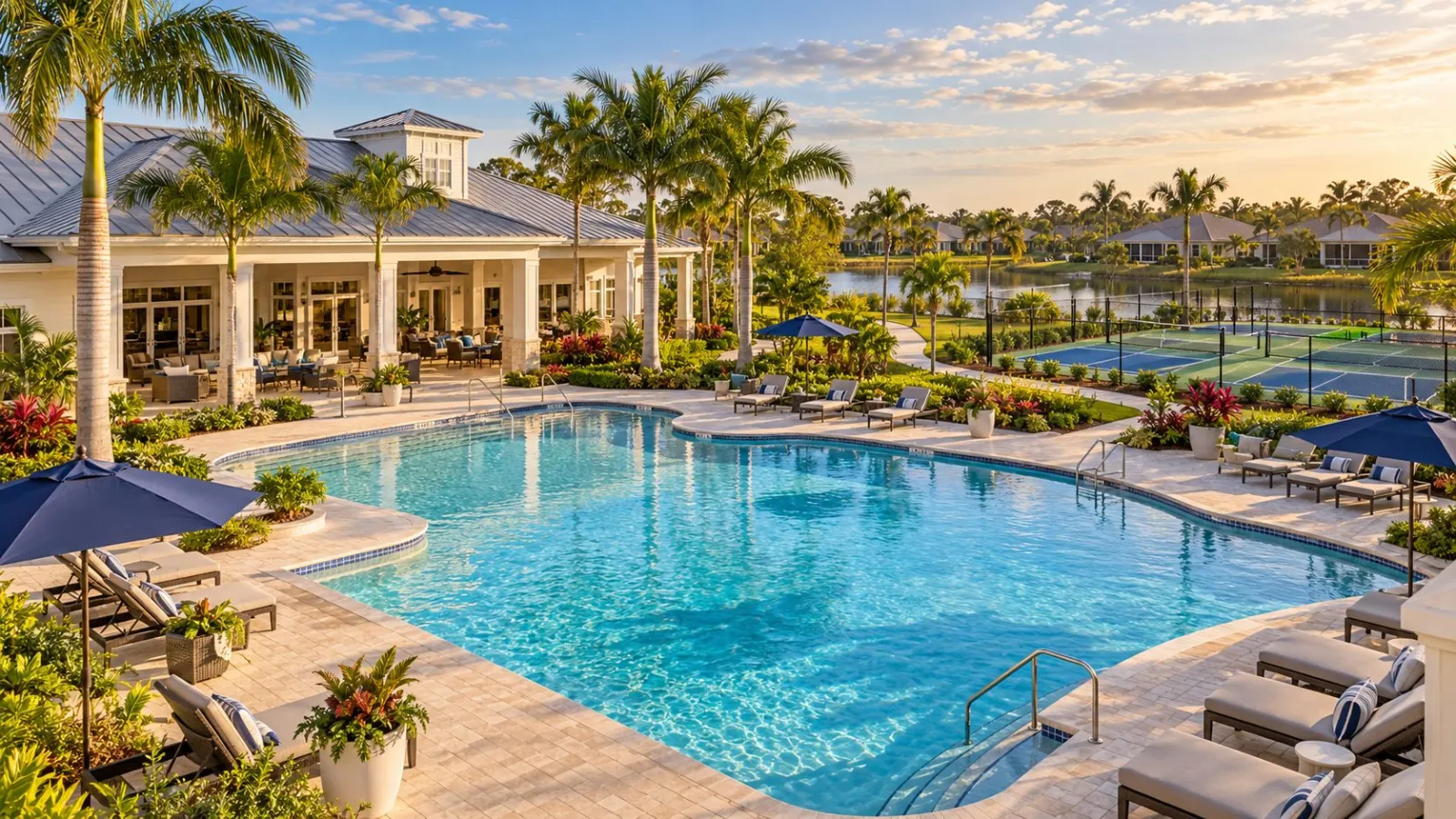
Clubhouses, pools, fitness centers, and planned activities are central to daily life. Confirm which amenities are open and what your fees cover.
Look at course access, membership structures, dining, and any separate initiation or usage fees. Living beside a course doesn’t automatically include membership.
Low-Maintenance Living
Some communities include lawn care or exterior services, while others leave more to the owner. Read the association documents instead of assuming “maintenance-free.”
Gated Neighborhoods
Gates range from staffed entrances to automated access. Compare security, visitor procedures, and the cost of maintaining shared facilities. Explore Treasure Coast gated communities.
Social & Active Living
Clubs, classes, organized events, and casual gathering spaces can matter as much as the home. Consider whether the community’s pace feels natural to you.
New homes may offer newer systems and current floor plans. Established communities may offer mature landscaping and a longer record of fees and resident life. Both deserve careful evaluation.
Finding the Right Fit
Compare Communities Before You Fall for a Listing
Tiffany’s Coastal Fit Method™ is a structured way to compare places before you get attached to one home. It looks at five fits: Lifestyle, Location, Community, Home, and Future Fit. You rate each one, and the ratings roll up into your Coastal Fit Score™.
For a 55+ search, that means looking past the clubhouse photo. How often will you actually use the amenities? Is the community convenient to the people and places that matter to you? Will the monthly cost still make sense after a property tax reassessment or a future association increase?
Each community is rated from 1 to 10 in all five areas, and the average is the score. For example, 40 points across five areas is 8/10. The score stays pending until the details are verified, and a high score never overrides a failed must-have. It shows personal fit, not investment performance. A Field Test then confirms the shortlist: drive the routes, do the grocery run, and visit on a regular weekday.
Lifestyle Fit
Your pace, activities, and the amenities you’ll really use.
Location Fit
Healthcare, airports, and the daily routes you’ll drive.
Community Fit
Club-centered or independent, plus fees and rules.
Home Fit
Floor plan, upkeep, and condition.
Future Fit
Flexibility, carrying costs, and resale.
Plan Your Next Smart Move
Not Sure Which Community Is Right for You?
Start with a conversation about your lifestyle, housing needs, budget, and timing. Then we’ll use the Coastal Fit Method™ to find the right fit for your next smart move.
Featured 55+ Communities
Explore 55+ Communities Across the Treasure Coast
The Treasure Coast has a range of age-restricted neighborhoods, from newer master-planned communities to established ones with their own ownership structures. These are starting points for comparison, not a complete list. Amenities, pricing, and availability change, so confirm current details and community rules before you decide.
Del Webb Tradition | Port St. Lucie
A 55+ community in Tradition with single-family homes and attached villas. The developer lists a clubhouse with a fitness center and a full-time lifestyle director, a resort-style pool and spa, pickleball, tennis, and bocce courts, and lake-view walking trails. The developer also reports that the community is nearly sold out, with remaining new homes offered as quick move-ins, so many opportunities now come through resale.
LakePark at Tradition | Port St. Lucie
A 55+ community in Tradition developed by Minto, with villas and single-family homes. The Club at LakePark includes a fitness center, resort-style pool and spa, an event lawn, and a dog park, and the developer has said residents also have access to TownPark facilities. The developer’s last villa release was in 2020, so most homes you see today are likely resale. Confirm current availability and fees.
Valencia at Riverland | Port St. Lucie
GL Homes’ 55+ neighborhoods within the 4,000-acre Riverland master plan, including Valencia Cay, Grove, Walk, and Parc. The developer describes a 16-acre Sports & Racquet Club with a 51,000-square-foot wellness and fitness center, plus a dedicated social club and lifestyle director in each Valencia community. Home styles include attached club villas and single-family plans. Ask exactly which amenities and fees apply to the specific home you’re considering.
Spanish Lakes | Fort Pierce
A group of age-restricted communities in Fort Pierce, including Spanish Lakes Fairways and Country Club Village. Listings in the area often advertise clubhouse, pool, golf, and court amenities and tend to sit at different price points than newer master-planned communities. Ownership can differ from a typical fee-simple neighborhood (some listings are labeled leasehold), so confirm the land arrangement, recurring charges, and resale requirements before you buy.
Total Cost of Ownership
What Does It Really Cost to Live in a 55+ Community?
The asking price is only part of the decision. Two similarly priced homes can carry very different monthly costs. Before you make an offer, request the documents and estimates that apply to the specific property.
HOA and Club Fees
Compare dues, payment frequency, what’s included, reserve funding, planned increases, and any separate club membership charges.
Property Taxes
In Florida, a home is generally reassessed at market value after a sale, so your bill may be much higher than the seller’s. The Save Our Homes cap on annual increases starts the year after you receive a homestead exemption, and an existing benefit may be portable to a new Florida homestead (up to $500,000, with a March 1 filing deadline). Confirm details with your county property appraiser.
Insurance
Homeowners, wind, and flood costs depend on the home, its age and construction, its location, and your coverage, not just the community name. Get quotes before you commit.
CDD, Capital Contributions, and Assessments
Ask whether a Community Development District applies, whether there are transfer or capital contributions at closing, and whether special assessments exist or are proposed.
Ownership Structure
Confirm whether the home is fee simple, a condominium, a cooperative, manufactured housing, or on leased land. Financing, insurability, and monthly obligations can differ.
The most useful comparison is the total cost of owning and living in each community, not just the price or the advertised HOA fee.
How 55+ Rules Work
What “55+” Actually Means
Under federal and Florida fair housing law, a community can qualify as housing for older persons if at least 80 percent of its occupied homes have at least one resident who is 55 or older. The community must also publish and follow policies showing it operates as 55+ housing, and it must verify residents’ ages at least every two years.
So “55+” doesn’t always mean every resident must be 55. Many communities adopt stricter rules than the law requires, such as a minimum age for every resident or limits on guest stays. Review the community’s actual policies, and get answers in writing for your household before you sign a contract. Rules on leasing, pets, and guests vary too.
Planning Your Move
Moving to a Treasure Coast 55+ Community
Relocating from elsewhere in Florida or out of state adds another layer. The right community should fit your broader routine: healthcare, shopping, beaches, boating, family, airports, and the roads you use most.
Visit on a regular weekday as well as touring the amenities. Drive the surrounding area, test the routes you’d use, and ask residents how the neighborhood feels outside of a sales presentation. If you’re choosing between new construction and resale, compare closing timelines, builder incentives, and the cost of making a home your own.
Selling Your 55+ Home
Selling a Home in a Treasure Coast 55+ Community?
If you own in an age-restricted community, your competition is more specific than nearby listings in the same ZIP code. Buyers compare floor plans, lot positions, upgrades, association costs, and other homes in the same development.
Tiffany uses the Coastal Valuation Method™ to examine relevant sales, active competition, buyer demand, and what sets your home apart. The Coastal Ready Approach™ then works through five steps before you list: Condition, Presentation, Buyer Confidence, Lifestyle Story, and Launch Readiness. In a 55+ community, that includes gathering current HOA or club documents, fees, and community rules so buyers aren’t left with unanswered questions. Preparation and pricing work together, so the goal is to price and prepare your home from evidence, not guesswork. A valuation isn’t a formal appraisal and doesn’t guarantee a sale price.
Local Guidance
Local Experience. A More Informed Move.
I’m Tiffany L Young, Broker of Young Group, and I bring 20 years of real estate experience in South Florida and the Treasure Coast to your move to a 55+ community.
If you’re buying, we’ll start with the lifestyle, location, and property choices that matter most to you in a 55+ community. If you’re selling, we’ll start by evaluating your home’s competitive position and the decisions that deserve attention before launch.
Whether you’re moving to a 55+ community, changing communities, or preparing to sell, I’ll help you compare your options, find the right fit, and move forward with a clear plan.
55+ Community Questions
Frequently Asked Questions About Treasure Coast 55+ Communities
What are some 55+ communities in Port St. Lucie?
Del Webb Tradition, LakePark at Tradition, and Valencia at Riverland are examples. Other age-restricted communities exist in the broader area, so confirm each community’s status, ownership type, and rules before you compare.
What’s the difference between a 55+ community and an active adult community?
“55+” refers to age-restricted housing. “Active adult” describes a lifestyle-focused approach with recreation and social amenities. The phrase alone doesn’t guarantee a particular age policy or feature.
Do all residents have to be at least 55?
Not necessarily. Qualifying housing needs at least 80 percent of occupied homes to have a resident who is 55 or older, so some younger residents may be allowed. Many communities set stricter rules, so confirm the policy for occupants, guests, and future household changes.
Can someone under 55 buy a home in a 55+ community?
Possibly. Owning and occupying are different questions, and rules vary by association. Get written guidance about your household before entering a contract.
How much are HOA fees in Treasure Coast 55+ communities?
There’s no standard fee. Dues depend on the community, the home type, and what’s included. Ask for the current budget, fee schedule, governing documents, and any pending increases or assessments.
Are there new-construction 55+ homes in Port St. Lucie?
Some communities have offered new homes, but several of the best-known ones are nearly sold out or mostly resale. Availability changes, so confirm current inventory directly with the builder or your agent.
Are there 55+ golf communities on the Treasure Coast?
Yes, golf-oriented communities exist in the region, but course access, membership requirements, and age restrictions vary. Compare each development individually instead of assuming every golf neighborhood is 55+.
Can I rent out a home in a 55+ community?
Rules vary. Associations may set minimum lease terms, approval requirements, frequency limits, or occupancy restrictions. Read the leasing provisions before you buy if rental flexibility matters.
Will my property taxes change if I move here?
Usually, yes. Florida generally reassesses a home at market value after a sale, so the seller’s bill is a poor guide. Ask your county property appraiser about homestead and portability.
What should I compare before choosing a 55+ community?
Lifestyle, location, home design, association costs, taxes, insurance, ownership structure, restrictions, and resale. The Coastal Fit Method™ helps you weigh them together.
Ready When You Are
Ready When You Are
Whether you’re comparing 55+ communities or preparing to sell a home in one, the next step is a conversation about what matters most to you.
Selling Your 55+ Home
Understand your home’s competitive position and what buyers may compare it with.
Moving to a 55+ Community
Compare communities, costs, and lifestyles so you can find the right fit.