

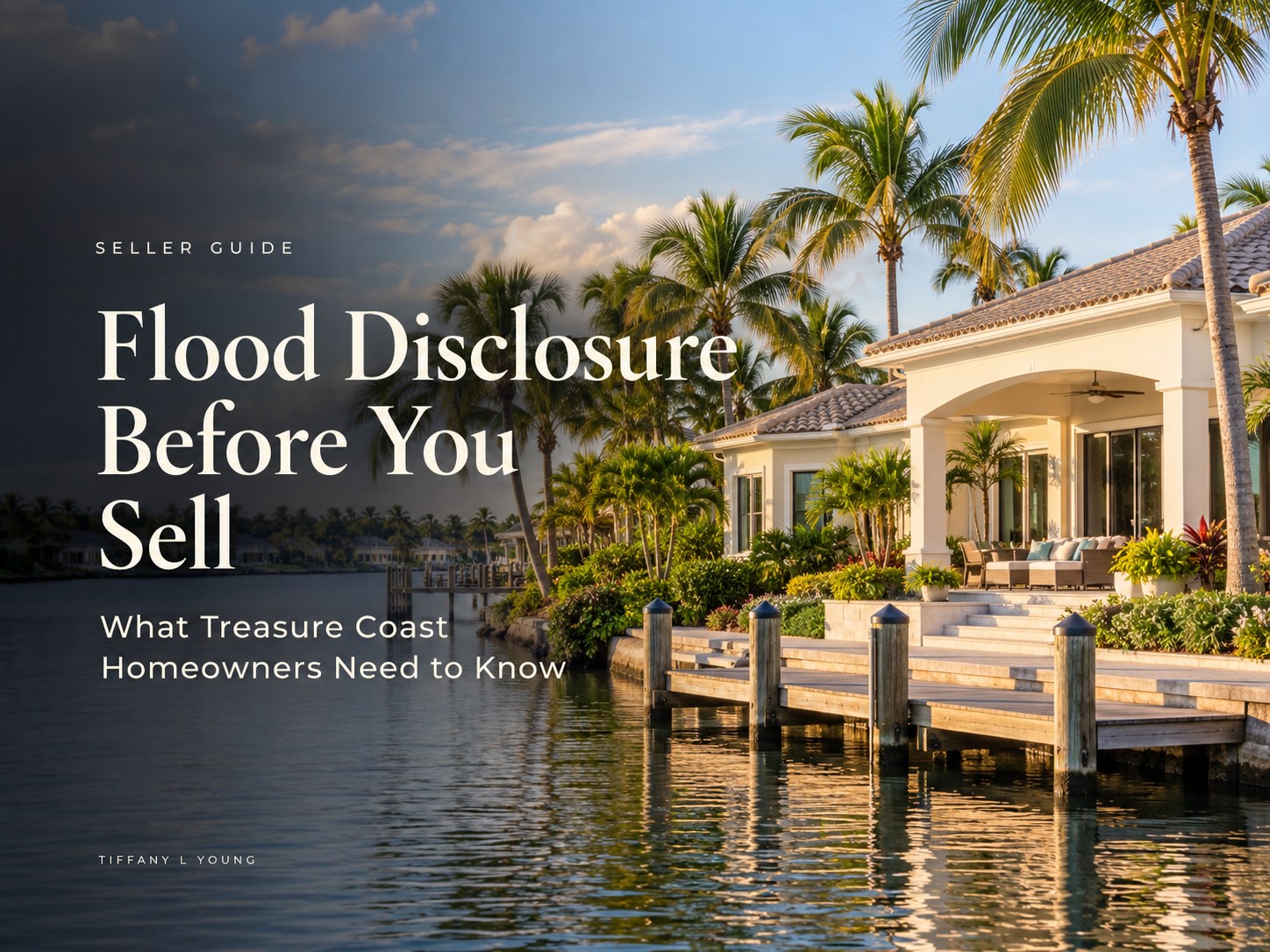
Florida Flood Disclosure for Treasure Coast Home Sellers
What do Florida sellers have to disclose about flooding?
Florida sellers must give buyers a completed flood disclosure at or before execution of the sales contract. Section 689.302, Florida Statutes, asks about known flooding that damaged the property during the seller’s ownership, flood-related insurance claims, and assistance received for flood damage. The requirement began October 1, 2024, and expanded October 1, 2025. For Treasure Coast sellers, the practical step is to review the history and supporting records before listing.
If you’re selling in Stuart, Palm City, Port St. Lucie, Jensen Beach, or elsewhere on the Treasure Coast, address flood history early, as part of your overall plan for selling a home on the Treasure Coast. This applies to residential sales generally, including inland homes. Waterfront location alone doesn’t determine whether a property has flooded, and a flood-zone designation doesn’t replace the disclosure.
The three questions on the form
The disclosure covers three separate subjects. Use the current form that follows the statute’s required wording; Florida Realtors offers Flood Disclosure FD-2. Complete it accurately and retain a record of delivery.
Flooding knowledge. Do you know of flooding that damaged the property during your ownership? A flood-related insurance claim isn’t required for this answer to be yes. Water entering a garage or damaging exterior improvements deserves review; temporary yard pooling without damage shouldn’t automatically be treated as a qualifying damage event.
Insurance claims. Have you filed a claim with an insurance provider relating to flood damage?
Assistance received. Have you received assistance for flood damage to the property? This is no longer limited to federal assistance. FEMA aid is one example, rather than the entire category.
For this disclosure, flooding includes inundation from overflowing inland or tidal waters, unusual and rapid runoff or surface-water accumulation from established sources, and sustained standing water from rainfall. If an event is difficult to classify, ask a Florida real estate attorney how to report it.
The form also explains that homeowners insurance doesn’t include flood-damage coverage and encourages buyers to discuss separate flood coverage with their insurance agent.
Why the absence of a claim does not settle the question
The three answers stand independently. You may have no insurance claim and no assistance to report but still know of flood damage that must be disclosed. A denied claim also shouldn’t be treated as a claim that was never filed.
Florida’s broader disclosure duties also matter. Under Johnson v. Davis, sellers must disclose known facts that materially affect residential property value, aren’t readily observable, and aren’t known to the buyer. Completing the flood form doesn’t replace other applicable disclosures.
Keep the focus on accurate answers and supporting records. Repairing damage doesn’t erase the historical questions on the form.
Section 689.302 doesn’t itself set out a purchaser cancellation procedure or a specific penalty. That doesn’t eliminate potential claims under other law or rights under the contract.
What this means for your sale and your price
Disclosure can affect a buyer’s assessment of condition, insurance costs, and future risk. Providing it early gives buyers time to evaluate the facts. It doesn’t guarantee a sale, prevent renegotiation, or establish a particular price adjustment.
Before listing, I recommend working through these steps:
- Gather the paper trail. Locate claim correspondence, assistance records, repair invoices, permits, drainage work, and any elevation certificate you have. Include information about denied claims or repairs you paid for yourself.
- Reconcile the records with your answers. Start with what you know, then check the available documents. Don’t guess or minimize an event because it seems old or because repairs were completed.
- Explain completed repairs clearly. Organize receipts, permits, warranties, and professional reports where available. Describe the work accurately without claiming that it eliminates future flood risk.
- Address insurance early. Existing premiums can provide background, but they aren’t a quote for the buyer. Encourage buyers to obtain property-specific quotes and review coverage, deductibles, eligibility, and timing with their insurance agent. If the parties include an insurance contingency, its exact wording, premium limits, notice requirements, and deadlines control. Providing records doesn’t remove that contingency. For more on how carriers are viewing Treasure Coast homes right now, read what insurance rate cuts mean for sellers.
- Review waterfront improvements separately. Seawalls, docks, and boat lifts may warrant professional evaluation. Their condition and permit history are related due-diligence topics, but they don’t establish whether the home has flooded or replace the statutory disclosure. See my guide to selling a Stuart waterfront home for what buyers check.
Through my Coastal Valuation Method™, I consider a home’s condition, market evidence, and competitive position. Flood history and documented repairs belong in that discussion. Any pricing recommendation should reflect the property and available evidence, rather than assume a universal discount for a past event. Read more about how to price a home on the Treasure Coast.
If you’re a buyer relocating to the Treasure Coast
Request the flood disclosure early, ideally before making an offer. Review it alongside available elevation records, flood-zone information, inspections, and property-specific insurance quotes. A seller’s lack of knowledge isn’t a guarantee that the property has never flooded or won’t flood in the future. Coordinate inspection and insurance deadlines with your agent, insurer, and attorney.
Frequently asked questions
Do I have to disclose flooding if I never filed an insurance claim?
Yes, if you know of flooding that damaged the property during your ownership. The form asks about that knowledge separately from claims and assistance.
When does the flood disclosure have to be given to the buyer?
At or before the time the sales contract is executed. Don’t wait for the inspection period or for a buyer to ask.
What counts as “flooding” under Florida’s disclosure law?
It includes inundation caused by inland or tidal overflow, unusual and rapid accumulation of runoff or surface water from established sources, and sustained standing water from rainfall.
Does the law apply to homes I’ve owned for years?
Yes. Long-term ownership doesn’t exempt a residential sale. The original requirement took effect October 1, 2024; the expanded form took effect October 1, 2025. The knowledge question addresses damage during your ownership.
Should I talk to an attorney before I complete the form?
Seek legal guidance if you’re unsure how to classify an event, describe a repair, or report a denied claim or assistance. Your agent can help organize the process, but the seller is responsible for the disclosure answers.
Prepare for your Treasure Coast home sale
The best time to organize flood-history records is before you list. Request your personalized home valuation to discuss your home’s market position, preparation priorities, and timing. I’ll help you identify the records buyers may request and coordinate the next steps.
About Tiffany L Young
Tiffany L Young is Broker of Young Group. With more than 20 years in real estate, she helps Treasure Coast homeowners sell strategically and buyers find the right home in the right community. Her Coastal Valuation Method™ and Coastal Fit Method™ guide conversations about pricing, community fit, ownership costs, and resale considerations.
Young Group. This article provides general information, not legal or insurance advice. Consult a Florida real estate attorney and a licensed insurance professional about your property and transaction.
Sources
- Florida Senate: 2026 Florida Statutes, section 689.302
- Florida Realtors: Florida Expands Flood Disclosures
- Florida Department of Financial Services: Property Insurance Changes
- Florida Realtors: New and Updated Forms (Flood Disclosure FD-2)